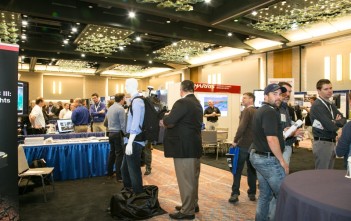
Leica’s Pegasus:Backpack on the Show Floor
3. The Next Software Needs
Having the data is only part of the equation if we can’t turn it into useful deliverables. This means that we have a very real need for software that can eat up raw data and automatically spit out the information we need.
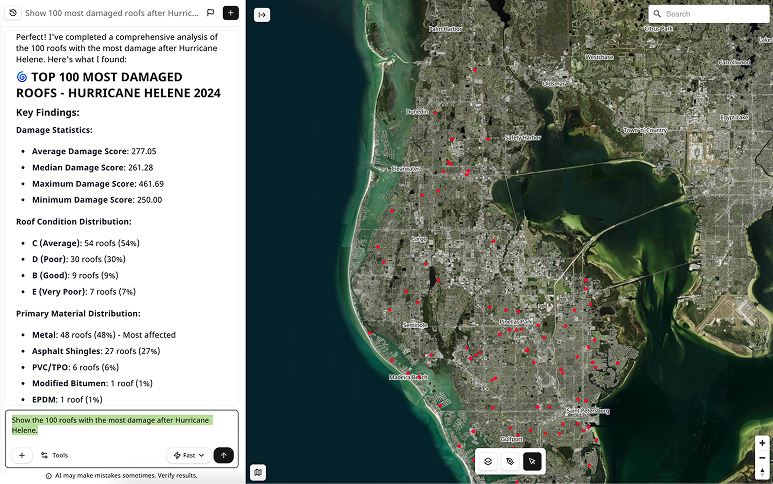
We are going to need better auto-extraction, auto-recognition, and auto-classification software. We are going to need change-detection software that will very clearly tell us what has changed between scans. As Amar Nayeghandi (director of remote sensing at Dewberry) explained, we are also going to need visualization software that shows end users exactly what they need to see at any point in time.
It’s true that software generally lags behind hardware, because there’s no business case for designing software to process data no one can capture yet. But looking at all this data that’s going to be captured in the coming years, it looks like the software industry will have all the data (and all the pent-up demand) it needs to get things moving. The software revolution may not have started yet, but I think it will be a big focal point over the next few years.