


3. 3D is Bringing New Construction Methods
3D printing is well known for producing bobble-heads and keychains, but it is poised to have a legitimate effect on the way we construct buildings and infrastructure as well.
The technology is still in its early stages when it comes to construction applications.The WEF notes that large-scale 3D printing is not quite precise enough for most applications and produces rough-looking results. Furthermore, big printing remains slow and smaller printers are too small to be useful. And it’s expensive.
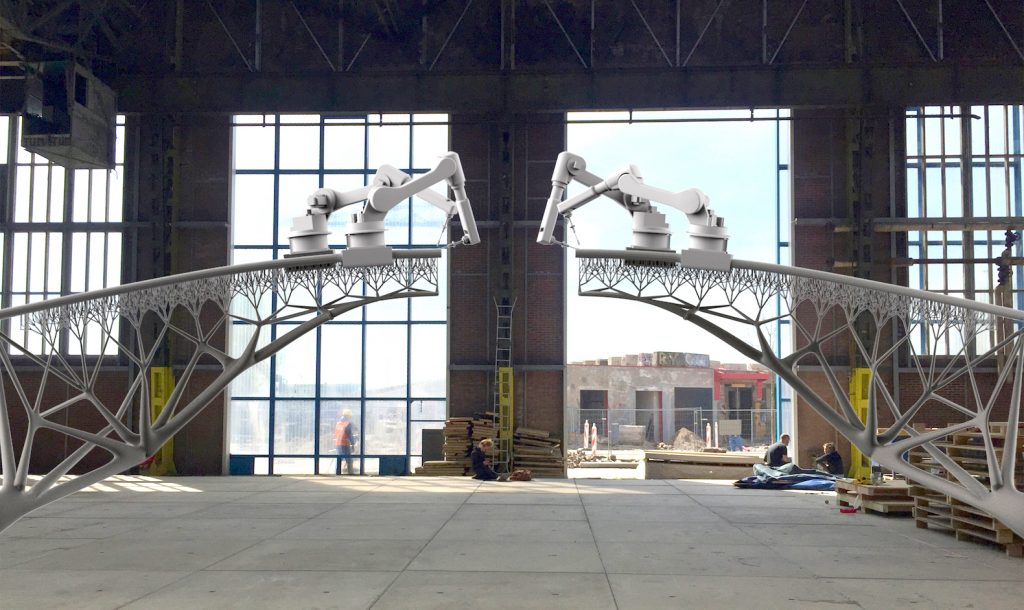
3D-printed steel bridge by Joris Laarman
If we persist in developing the technology, though, it will produce some big gains. According to the report, the technology promises productivity gains of up to 80% in some applications, and a huge reduction in waste because objects can be purpose-built.
“Construction time for some buildings could shrink from weeks to hours, and customized components could be provided at a much lower cost.”
Real-World Example: Arup has used 3D-printed steel components in a project and saw a 75% reduction in weight and a 40% reduction in material compared to traditional approaches. WinSun, a Chinese construction company, is building 10 houses a day using 3D-printing technologies.