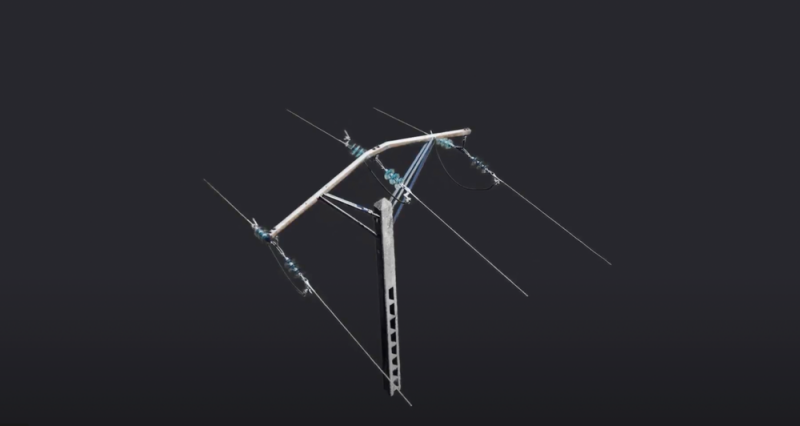
Perhaps the most exciting relatively new development in the world of reality capture over the last couple of years has been the development of neural radiance fields, or NeRFs. This technology is similar to photogrammetry in that it takes a series of 2D images and turns them into a 3D model, but uses a neural network to make these creations with significantly fewer images required, generating a radiance field. For the most part, at least from what’s been shared publicly, there haven’t been a ton of in-the-field use cases for this quite yet, which isn’t totally unexpected for a new tool.
That said, it doesn’t mean it’s not being used at all, and one company we have come across who has implemented it at least to some degree into their workflow is Alteia. The France-based company works with operators and owners to provide insights based on visual data using computer vision and artificial intelligence. Earlier this month on the company LinkedIn page, they posted about their use of NeRFs and how it has improved some specific workflows with their clients.
To learn more about how they’re using this exciting new technology, Geo Week News spoke with Alteia Chief Product Officer Jean Cesario and Chief Marketing Officer Baptiste Tripard.
Before getting into the NeRF workflow, though, it’s worth taking a second for some quick background about Alteia and their work because, as will be discussed below, in their mind there are still specific use cases for which this technology makes the most sense. As Cesario tells us, Alteia helps customers in their digital transformation by making sense of any type of visual data, enriched with geospatial and enterprise databases
The company
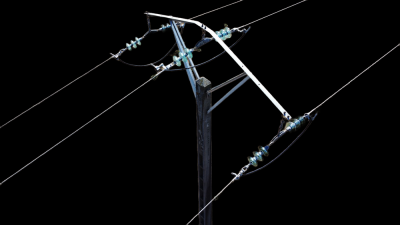
Cesario tells us that the main challenge was “to change the contractual phase,” as they deal with many large companies with standard contracts in terms of data acquisition and defined workflows in terms of data processing
As a result, Alteia ultimately self-funded their early work to provide examples to customers of how this technology can strengthen certain workflows
Customers have ultimately seen the return on investment by automating some tedious workflows and opening up experts for
●
●
●
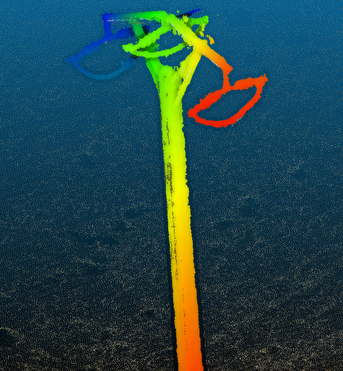
That’s not to say that this all comes without any drawbacks, something which both Cesario and Tripard acknowledge and why they are considering it as a tool in their toolbox rather than a new, dominant technology.
All of that being said, this is still very much an emerging technology, still in its nascent stages. The usability and functionality of these workflows will improve over time, and should both become even more impactful in existing workflows and open up new possibilities. Speaking about the future, Cesario points to potentially adding lidar into the mix as lidar and imagery become more intertwined in other reality capture workflows. He also notes that with the proliferation of smartphones and everyone having quick access to ever-improving cameras, there will be more demand for workflows which don’t require such rigorous image capture and overlap.
For right now, though, Alteia is having early success using it as one tool in part of their infrastructure inspection workflow. As Tripard tells us, NeRFs are “not the net product. It’s a facilitator.”